The office people actually want to come to
A modern Class A office is no longer just a space with desks, a glass facade, and a coffee machine. In 2026, it serves as a tool for human productivity, corporate culture, and talent attraction. This is precisely why the world’s leading workplace designers increasingly talk about a “human performance environment” rather than mere interior design. Beāte Laganovska, Development and Fit-out Project manager at Preses Nama Kvartāls, explains how to create a comfortable and productive office environment.
The office people actually want to come to
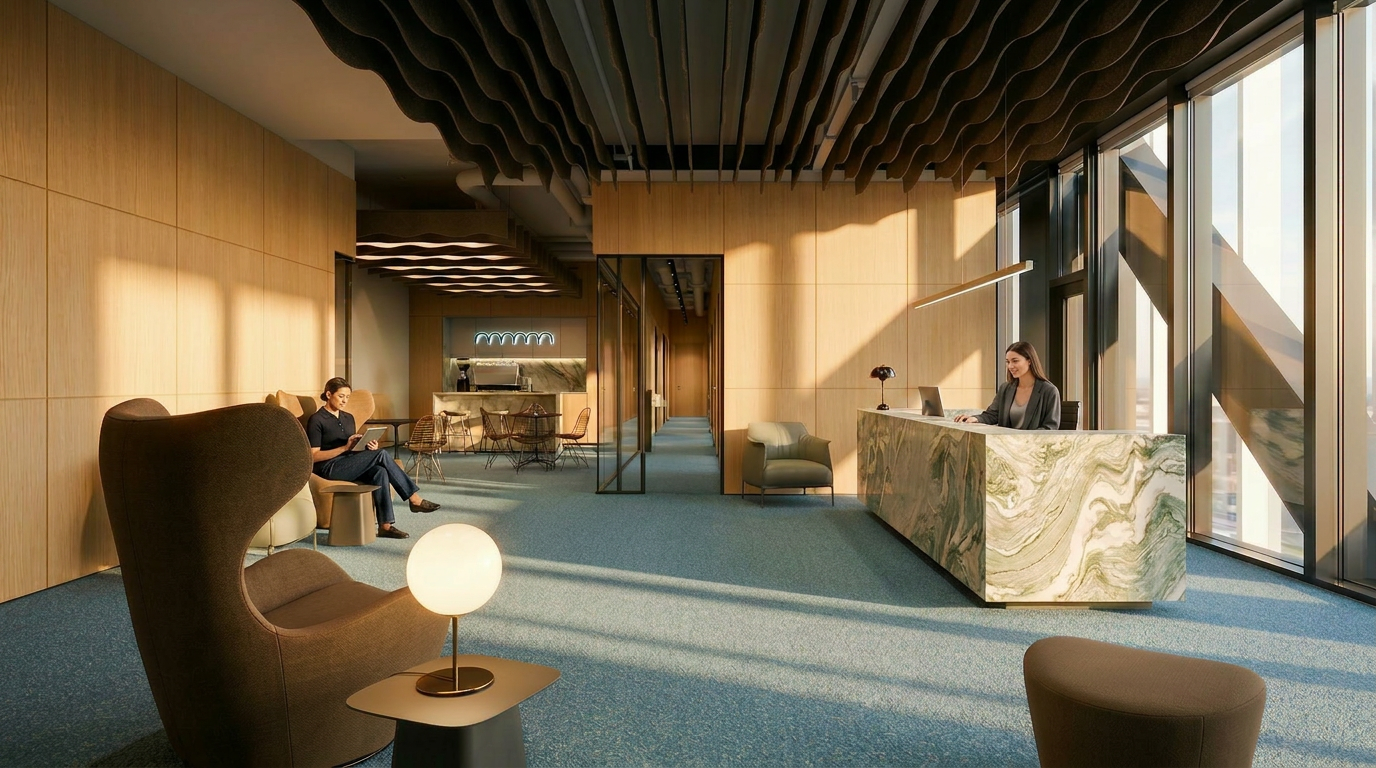
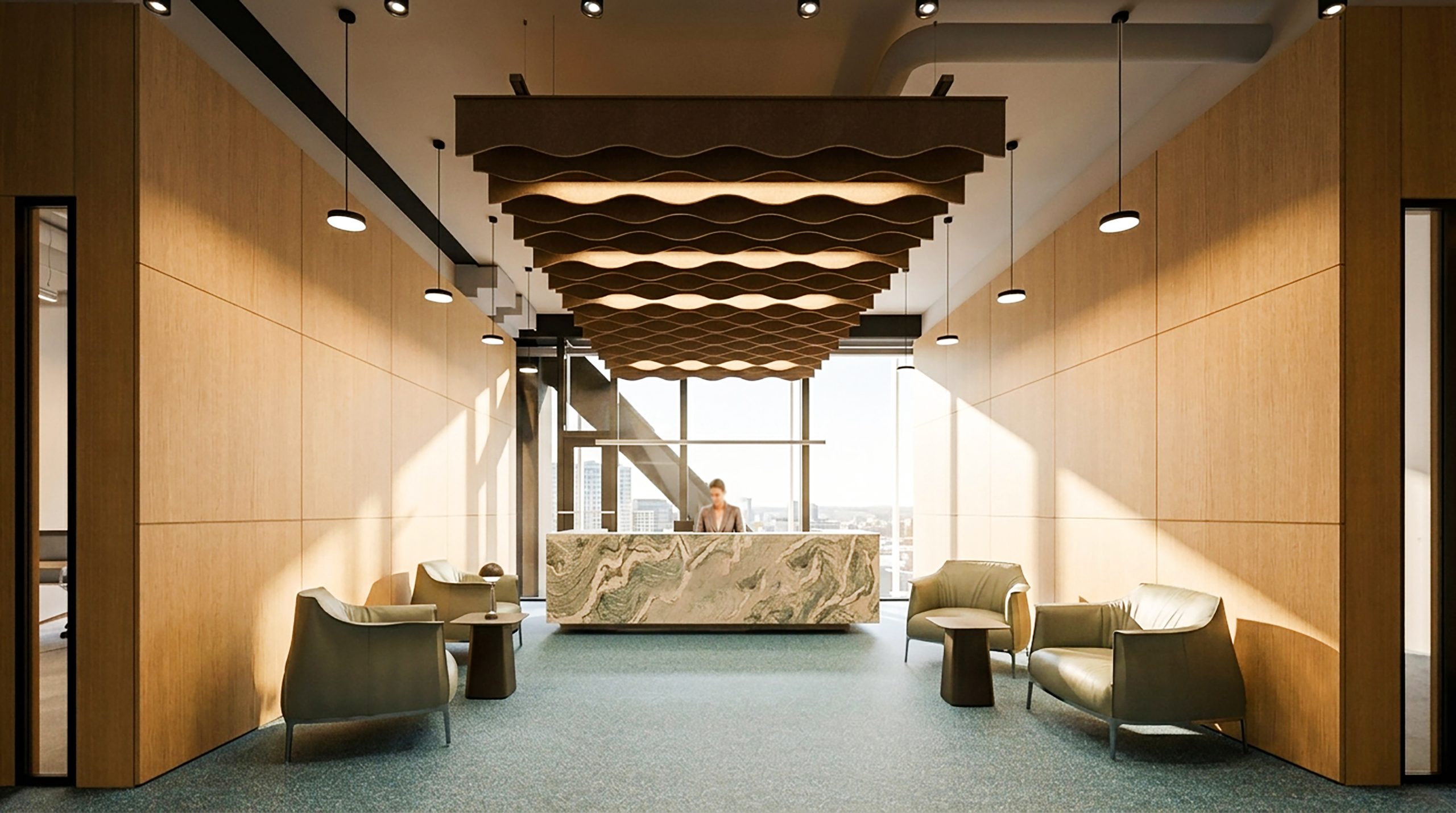
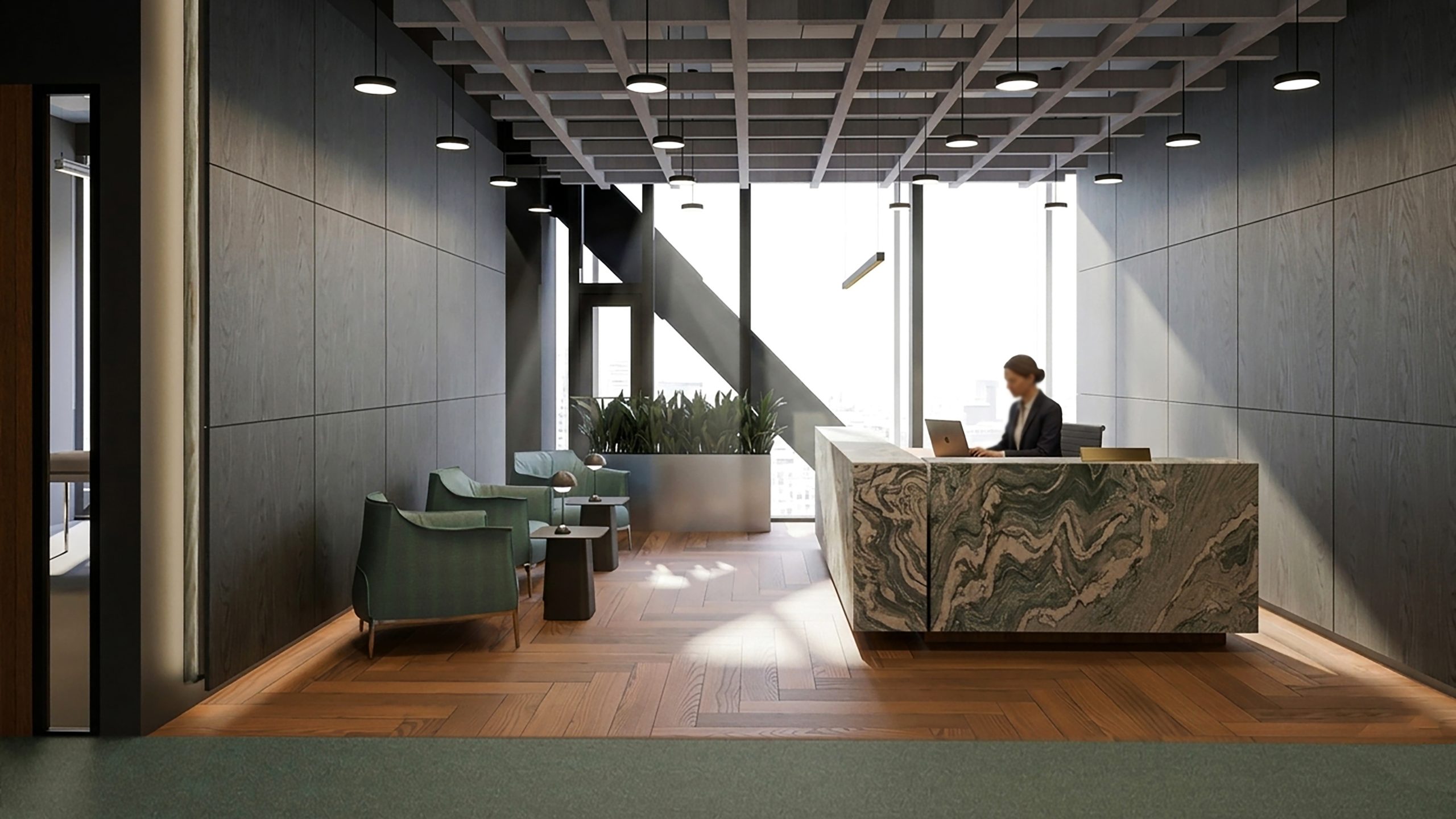
Today, employees don’t compare their office to other offices – they compare it to their homes, premium gyms, hotels, and lounge environments. This has given rise to the phrase “the office has to earn the commute” – the workplace must justify the time a person spends traveling to it. A good Class A office makes it easy to think, collaborate, and spend long hours in. A suboptimal office does the exact opposite – it subtly drains your energy. This is why next-generation business centers, such as Preses Nama Kvartāls, place a strong emphasis on natural daylight, acoustics, spatial layout, air quality, and emotional comfort. The offices at Preses Nama Kvartāls are designed as an Class A+ work environment featuring full-height glazing, flexible layouts, BREEAM Excellent sustainability standards, and panoramic views of the Daugava River and the center of Riga.
What makes a Class A office so valuable?
First – Light. Natural daylight is one of the most critical factors for human concentration and energy. Modern offices utilize glazed facades, full-height glass partitions, and open sightlines to ensure light reaches as many workstations as possible.
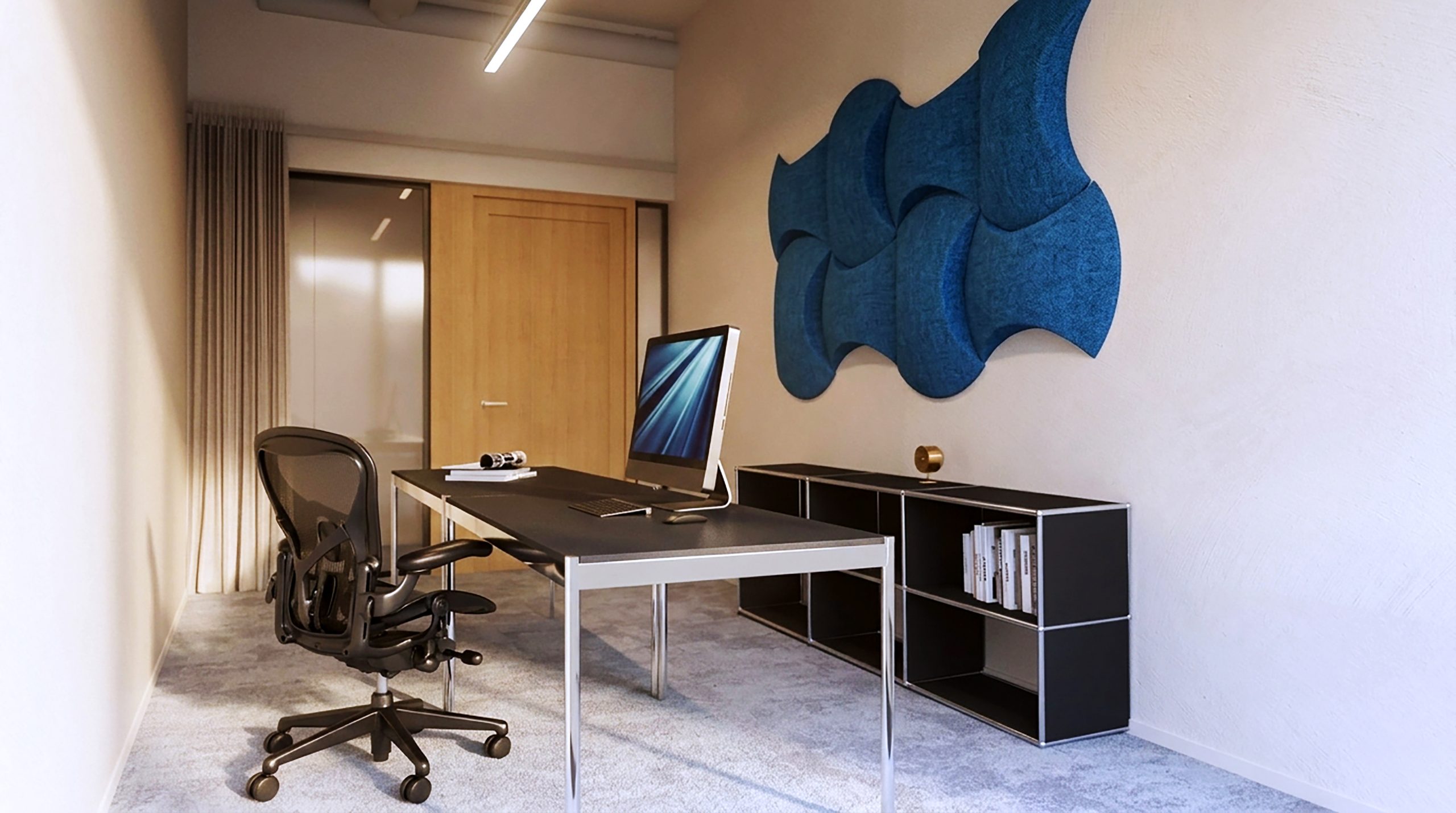
Second – Acoustics. Nowadays, an overly loud open-plan layout is considered an outdated approach. A high-quality Class A office utilizes acoustic ceilings, PET felt panels, carpet tiles, phone booths, quiet rooms, and thoughtful zoning. A good office doesn’t forbid conversation; instead, it creates an environment where noise never becomes exhausting.
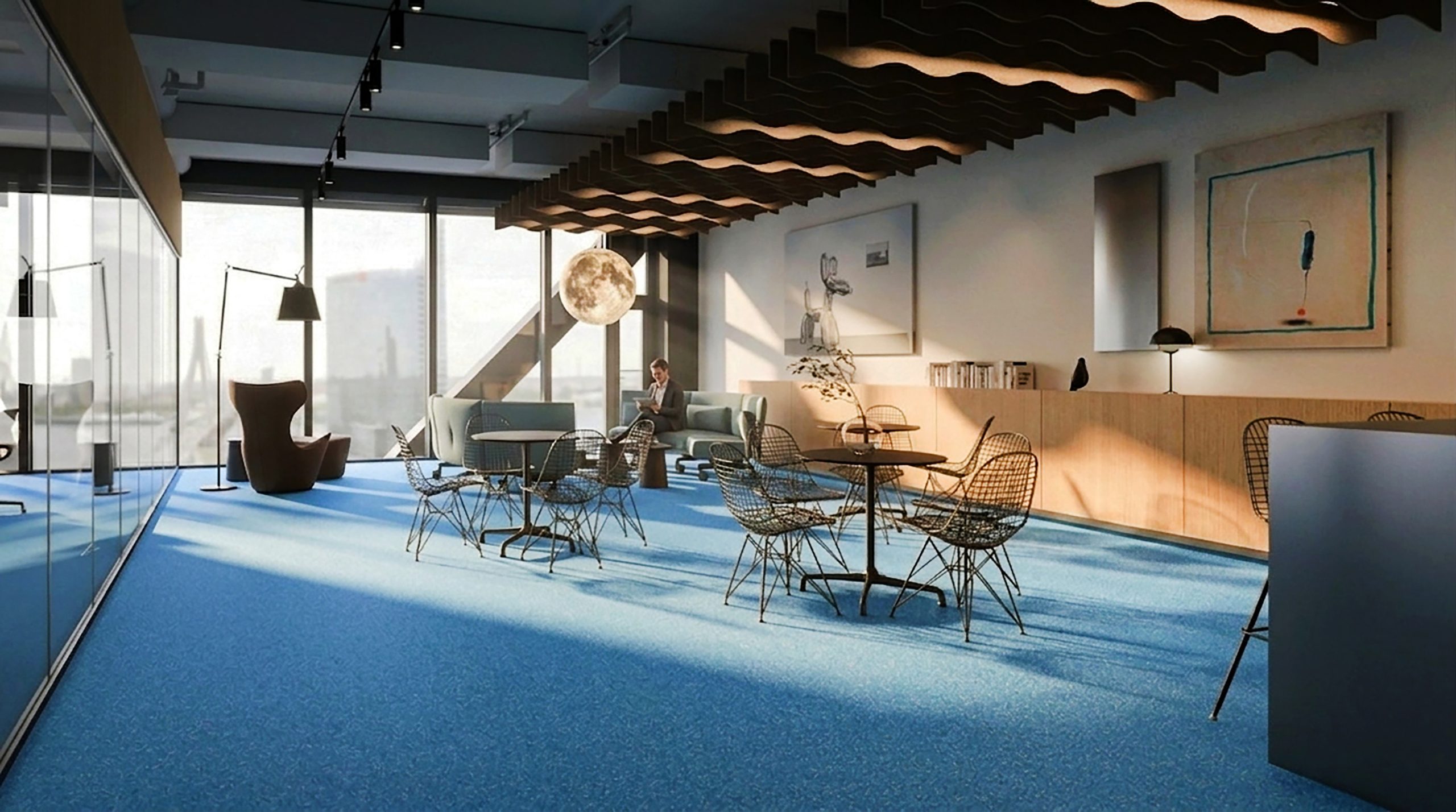
Third – Flexible layout. Uniform rows of desks no longer fit the modern pace of work. Throughout the day, people require different environments – for focused work, Teams calls, collaboration, presentations, and short breaks. Therefore, Class A offices are designed according to the activity-based workplace principle, where a dedicated zone is provided for every type of task and need.
The hospitality workplace principle is also becoming increasingly important -creating an office that feels welcoming. This translates to lounge and relaxation areas, warmer lighting, natural materials, a high-quality coffee or kitchen zone, and an environment that resembles a boutique hotel rather than a traditional corporate office.
What will you no longer find in a modern Class A office?
You will no longer find aggressively cold 4000K white lighting, low Armstrong-type drop ceilings, impersonal rows of desks, or poorly ventilated meeting rooms.
You also won’t find offices where people battle freezing air conditioning, noisy phone calls, and unstable Wi-Fi. In modern office design, climate comfort, acoustics, and technology are integrated at the very initial fit-out stage.
This is why next-generation offices increasingly adopt the open ceiling concept, smart BMS systems, CO₂ sensors, human-centric lighting, and room booking technologies. The environment becomes technologically advanced, yet almost seamless to the user.
The office of the future is not a place where people “have to show up.” It is an environment where they think more clearly, collaborate more effectively, and genuinely want to return. This is exactly what defines the true quality of a Class A office today – a vision implemented from the very beginning in the Preses Nama Kvartāls office building.
If your company is considering a move to a new office, explore your options at: https://presesnams.lv/en/become-a-tenant/ – office spaces are scheduled for handover to tenants as early as late 2026. Available floor areas range from 219 to 2500 m² on a single floor.